01 February 2026
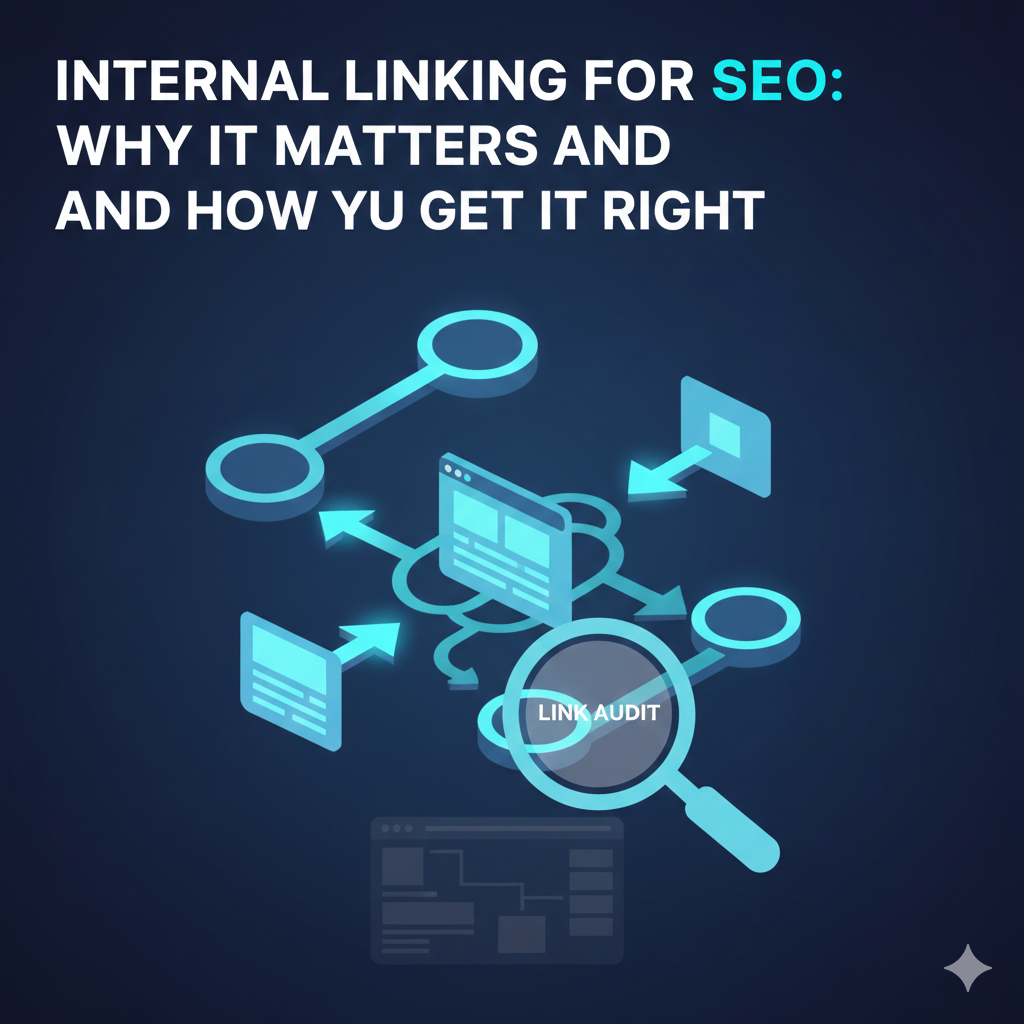
Internal Linking for SEO: Why It Matters and How to Get It Right
In the complex world of Search Engine Optimization, we often obsess over the "external"—backlinks from high-authority sites, social signals, and guest posts. However, one of the most powerful ranking levers is entirely within your control and often sits right under your nose: Internal Linking.
In 2026, as AI search engines prioritize topical authority and clear site structures, internal linking has evolved from a simple navigation aid into a sophisticated strategy for "feeding" search bots the context they crave.
What is Internal Linking?
At its core, an internal link is any hyperlink that points from one page on your domain to another page on that same domain. While they help users navigate your site, their primary SEO function is to establish a site hierarchy and spread link equity (sometimes called "link juice") across your pages.
Why Internal Linking is Non-Negotiable for SEO
1. It Creates a Roadmap for Search Crawlers
Search engines like Google use "spiders" to crawl the web. When these spiders land on your homepage, they follow links to discover new content. If a page has no internal links pointing to it (an "Orphan Page"), it is nearly impossible for a search engine to index it, let alone rank it.
2. It Distributes PageRank
Not all pages on your site are equal. Your homepage and your "power posts" likely have the most backlinks from external sources. Through internal linking, you can funnel that "authority" from your high-performing pages down to your newer or lower-ranking content, helping them climb the SERPs (Search Engine Results Pages).
3. It Establishes Topical Authority
AI search engines look for "clusters" of information. By linking related articles together, you signal to the AI that your website is a comprehensive resource on a specific subject. This is the cornerstone of the "Hub and Spoke" model, which we will discuss later.
4. It Improves User Experience (UX) and Dwell Time
A well-placed internal link keeps users on your site longer. If someone is reading about "How to Start a Blog," and you link to a related post on "Best Web Hosting for 2026," they are likely to click. This reduces your bounce rate and tells search engines that your content is engaging and relevant.
How to Get Internal Linking Right: A Strategic Framework
Creating a web of links shouldn't be random. To see real SEO gains, you need a methodical approach.
The Hub-and-Spoke Model (Topic Clusters)
The most effective way to organize links in 2026 is the Topic Cluster model.
- The Hub: This is a high-level "pillar" page that covers a broad topic in depth (e.g., "Digital Marketing Guide").
- The Spokes: These are more specific, long-tail articles that dive into sub-topics (e.g., "Email Marketing Tips," "TikTok Ad Strategy," "SEO Basics").
The Strategy: Every "Spoke" should link back to the "Hub," and the "Hub" should link out to every "Spoke." This creates a closed loop of authority that proves to AI engines that you have mastered the entire topic.
Optimize Your Anchor Text
Anchor text is the clickable text in a hyperlink. In the past, people over-optimized this by using the exact same keyword every time. Today, that looks like spam to an AI.
- Be Descriptive: Instead of "click here," use "best practices for internal linking."
- Use Natural Variations: Use synonyms and related phrases to help search engines understand the context of the destination page without being repetitive.
- Keep it Relevant: Only link to a page if it truly adds value to the reader’s current journey.
The "Link Depth" Rule
A golden rule in SEO is that any page on your website should be accessible within three clicks from the homepage. If a user (or a bot) has to click five or six times to find a specific product or article, that page is buried too deep.
Deep pages receive very little link equity and are often ignored by search engines. Use your navigation menu, footer, and breadcrumbs to flatten your site architecture.
Common Internal Linking Mistakes to Avoid
1. Linking to Irrelevant Pages
Just because you have a high-traffic page doesn't mean you should link to your most expensive product from it if the two aren't related. Irrelevant links confuse the search engine's understanding of your site's niche.
2. Over-Linking (The "Wall of Blue")
If a 1,000-word blog post has 100 internal links, the value of each individual link is diluted. More importantly, it creates a poor reading experience. Aim for 3 to 5 high-value links per 1,000 words, plus your standard navigation.
3. Broken Internal Links
A link that leads to a 404 error is a "dead end" for a crawler and a frustration for a user. Periodically audit your site using tools like Ahrefs or Screaming Frog to find and fix broken paths.
4. Using "Nofollow" Tags Internally
The rel="nofollow" tag tells search engines not to pass authority to a link. While you might use this for external links to untrusted sites, you should almost never use it for internal links. You want the authority to flow freely through your own domain.
The 2026 Edge: AI-Assisted Linking
Today, we can use AI to identify "semantic gaps." AI tools can scan your entire content library and suggest internal links based on the meaning of your paragraphs rather than just keyword matches.
For example, if you wrote a paragraph about "sustainable farming" three years ago and just published a new piece on "organic soil," an AI SEO tool can instantly identify the connection and suggest the link, ensuring your older content stays relevant and powered up.
Checklist for Your Next Blog Post
Before you hit publish, run through this quick internal linking checklist:
- Have I linked to at least 2–3 older, relevant posts?
- Have I gone back to 2–3 older posts and added a link to this new post?
- Is my anchor text descriptive and natural?
- Is the most important page I'm linking to appearing early in the article?
- Does this page fit into a clear "Topic Cluster"?
Conclusion
Internal linking is the "glue" that holds your SEO strategy together. It turns a collection of individual pages into a powerful, authoritative ecosystem. By focusing on the Hub-and-Spoke model, optimizing your anchor text, and ensuring a shallow site depth, you provide a seamless experience for both humans and AI bots.
Mastering your internal links is one of the few ways to see a significant jump in rankings without spending a dime on ads or outreach. Start auditing your structure today—your "link juice" is waiting to be squeezed.


 Digital SEO Bull


